Indonesia: The Undisputed Home of Patchouli
When fragrance houses and cosmetic brands around the world reach for patchouli oil, they are almost certainly sourcing it — directly or indirectly — from Indonesia. The country accounts for more than 80% of the global patchouli oil supply, a dominance that is no accident. It is the result of geography, climate, soil chemistry, and centuries of cultivated expertise that simply cannot be replicated elsewhere.
Understanding why Indonesia leads the world in patchouli production is essential knowledge for any buyer who cares about quality, consistency, and traceability.
The Geographic Advantage
Volcanic Soil and Tropical Climate
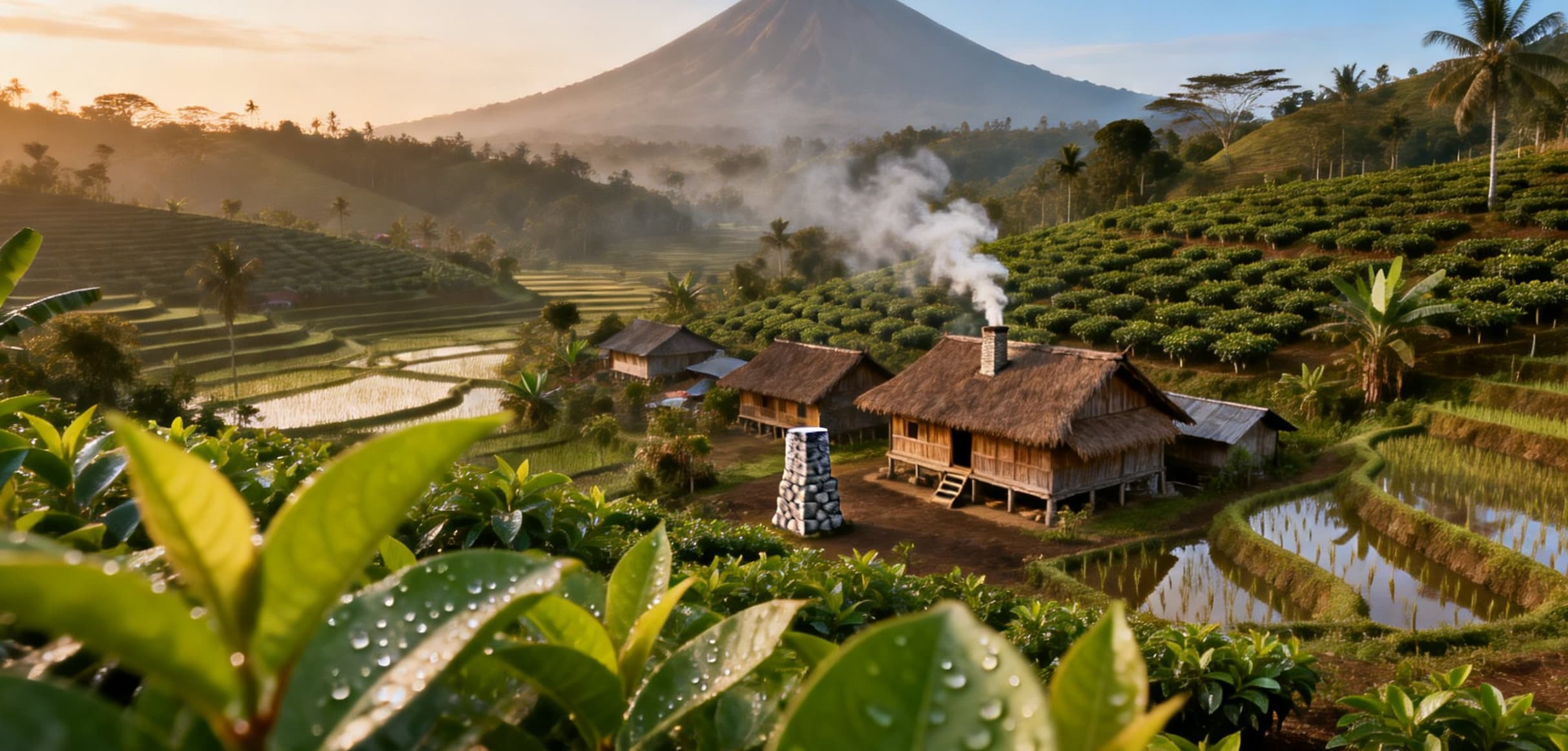
Patchouli (Pogostemon cablin) is a demanding crop. It thrives in a very specific set of conditions: high humidity, consistent warmth, well-drained soil rich in organic matter, and protection from harsh winds. Indonesia's equatorial location delivers all of this naturally.
The island archipelago sits on the Pacific Ring of Fire. Volcanic activity over millennia has deposited mineral-rich soil across Sulawesi and Sumatra — the two primary patchouli-growing islands. This volcanic substrate provides:
Rainfall in these regions is consistent year-round, with humidity levels that keep the patchouli plant in its ideal growing range. The result is a crop that produces oil with exceptional aromatic depth and high patchoulol content.
Altitude and Terroir
Like wine grapes, patchouli oil quality is shaped by terroir — the combination of soil, climate, and topography. The highland farms of Sulawesi, situated between 400 and 900 metres above sea level, produce patchouli with a cooler growing cycle. Slower maturation concentrates aromatic compounds in the leaf, contributing to the deep, complex character that perfumers prize in aged Indonesian patchouli.
Key Growing Regions
Sulawesi
Sulawesi is considered Indonesia's premier patchouli-growing island, particularly the northern and central highlands. The region's farms — many family-operated for multiple generations — are known for producing oil with the highest aromatic complexity. Aged patchouli from Sulawesi-grown material is a benchmark ingredient for fine perfumery worldwide.
Sumatra
Sumatra contributes significantly to Indonesia's overall patchouli output. The island's lower-altitude growing areas produce freshly distilled oil with higher patchoulol content (32–38%), making it highly suitable for cosmetics and personal care formulations.
Generational Farming Expertise
Indonesia's patchouli cultivation stretches back centuries. Farming families in Sulawesi and Sumatra have passed down knowledge of:
This accumulated knowledge is not easily documented or transferred. It lives in the hands and instincts of Indonesian farming and distillation communities — and it directly contributes to the quality of oil that reaches global buyers.
Why Origin Matters for Your Sourcing Decisions
Not all patchouli oil on the market is Indonesian. Some is produced in India, China, and Malaysia. While these origins can supply patchouli oil, experienced buyers and quality benchmarks consistently place Indonesian patchouli at the top for:
When evaluating any patchouli supplier, always request a Certificate of Analysis (COA) with GC/MS data confirming origin and patchoulol percentage. Genuine Indonesian patchouli has a recognisable chemical fingerprint.
The NusaVerde Difference
NusaVerde sources exclusively from partner farms in Sulawesi and Sumatra. Our direct relationships with farming families — not intermediary brokers — mean we can trace every batch from the field to your facility. This transparency supports your quality assurance processes and gives your supply chain team the documentation it needs.
Ready to source from the origin? [Request a sample](/contact) of our premium Patchouli Oil, including full COA and GC/MS documentation.