The Spice That Built Empires
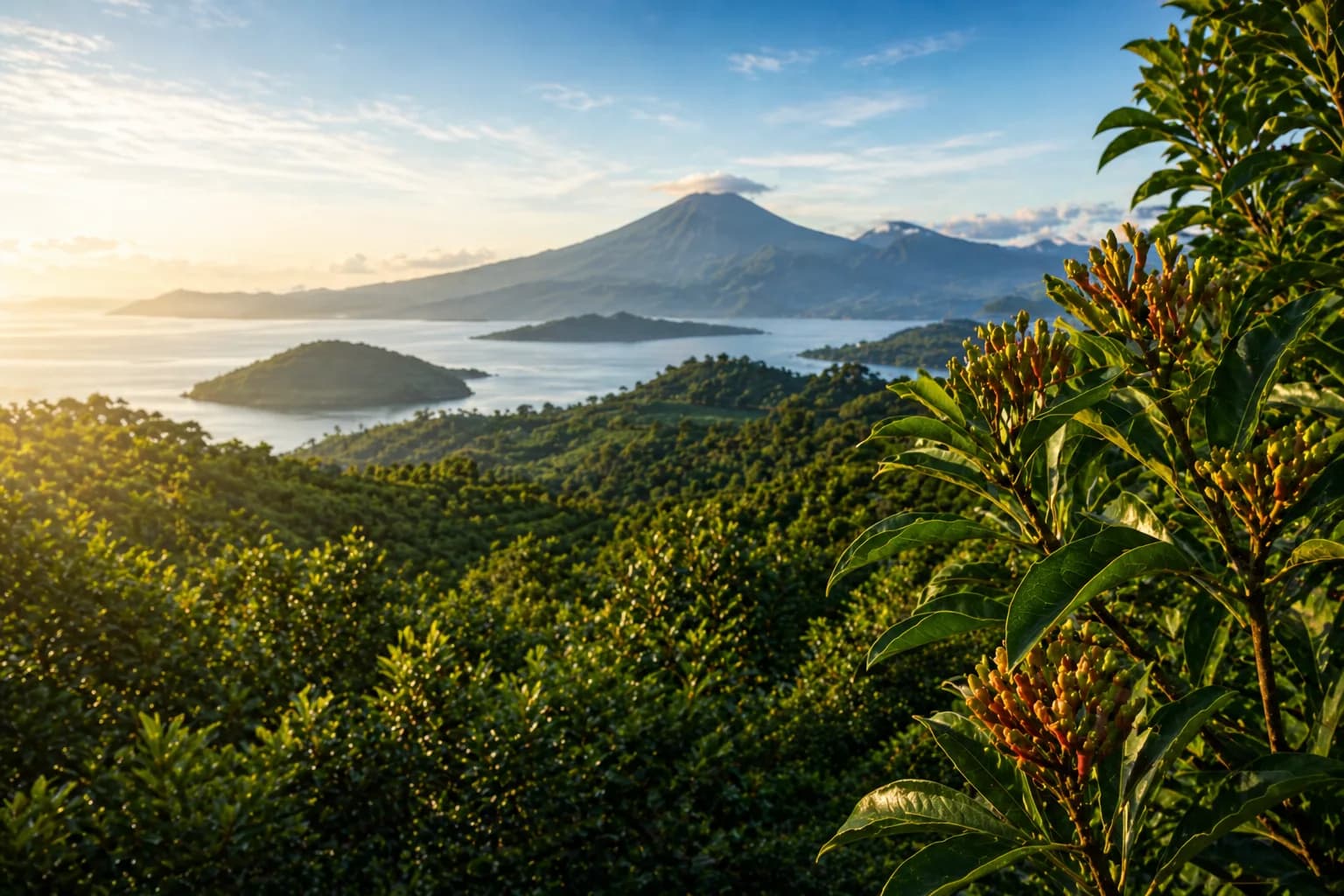
Long before patchouli reached European perfumers, cloves were reshaping the world. For centuries, Syzygium aromaticum grew in only one place on earth: five small volcanic islands in the Maluku archipelago of eastern Indonesia — Ternate, Tidore, Moti, Makian, and Bacan. These "Spice Islands" were so strategically valuable that Portuguese, Dutch, and British empires fought wars and funded entire colonial enterprises for control of their clove harvest.
The Dutch eventually won that contest and established a brutal monopoly over clove production in the 17th century. But no monopoly lasts. Clove cultivation eventually spread to Zanzibar, Madagascar, and Sri Lanka. Yet Indonesia never lost its position at the top. Today, the country accounts for the majority of global clove supply — a dominance rooted not in protectionism, but in geography, climate, and centuries of accumulated expertise.
Why Indonesia Produces the World's Best Cloves
Native Terroir
Cloves are indigenous to the Maluku Islands. The volcanic soils, tropical humidity, and consistent rainfall of this archipelago are not just suitable for clove cultivation — they are the conditions under which the plant evolved. Indonesian clove consistently delivers superior oil content (above 18% by weight) and eugenol concentrations of 80–90%, the chemical compound responsible for clove's characteristic aroma and most of its industrial value.
Clove grown outside its native range — Zanzibar is the most significant competitor — typically yields lower oil content and variable eugenol levels. For buyers who need consistent eugenol specifications across batches, Indonesian origin is the reliable choice.
Geographic Spread Reduces Supply Risk
Modern Indonesian clove cultivation is no longer confined to Maluku. Production has expanded across North Sulawesi, South Sulawesi, East Java, and parts of Sumatra. This geographic diversification means that a weather event affecting one region rarely disrupts national supply. For B2B buyers, this translates into more reliable year-round availability compared to single-origin sources.
Generational Farming Knowledge
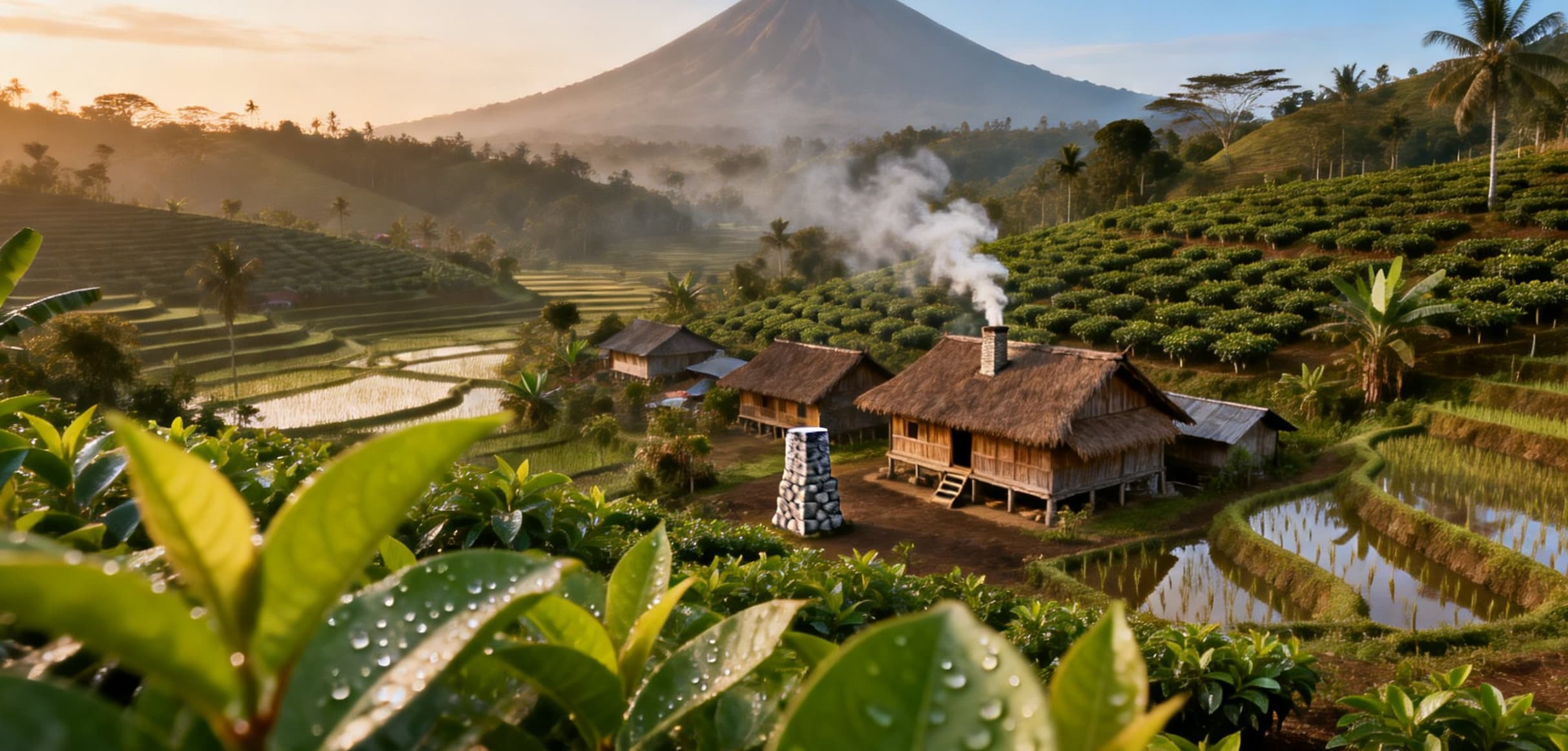
Clove trees are long-lived — a single tree can produce commercially for 50 to 100 years. Indonesian farming families in Maluku and Sulawesi have tended the same groves for generations, developing practical knowledge about:
This embodied knowledge is difficult to replicate quickly. It is a genuine competitive advantage that Indonesian producers hold over newer growing regions.
The Three Clove Oil Types
Commercial clove oil is produced from three distinct plant parts, each with its own specification profile:
Understanding which type your formulation requires — and sourcing from a supplier who can specify clearly — is the first step in building a reliable clove oil supply chain.
What B2B Buyers Should Know About Indonesian Clove Oil
Eugenol Content Is the Key Specification
For pharmaceutical, dental, and food applications, eugenol content is the primary quality indicator. Indonesian clove bud oil consistently delivers ≥80% eugenol — a specification that supports FEMA GRAS status for food use and meets European Pharmacopoeia standards for pharmaceutical applications.
Always request a Certificate of Analysis (COA) with GC/MS data confirming eugenol percentage. Reputable Indonesian suppliers will provide this for every batch.
IFRA and Fragrance Safety Considerations
Eugenol is a potent sensitiser at high concentrations. The International Fragrance Association (IFRA) sets usage limits for clove oil in different product categories. Buyers formulating for leave-on cosmetics or fine fragrance should be familiar with these limits and ensure their supplier can document the oil's eugenol content precisely.
Origin Traceability Supports Regulatory Claims
If your product carries natural, organic, or sustainably sourced claims, Indonesian clove oil from traceable farm partnerships — with ECOCERT organic certification and GC/MS batch testing — provides the documentation layer your compliance team needs. Know your supply chain from Maluku to your facility.
NusaVerde's Clove Oil Sourcing
NusaVerde sources Clove Bud Oil from partner farms in Maluku and Sulawesi. Our direct farm relationships — not intermediary brokers — mean full traceability, consistent eugenol specification, and documentation that supports pharmaceutical, food, and fragrance-grade sourcing requirements.
Interested in sourcing premium Indonesian Clove Oil? [Request a sample](/contact) with full COA and GC/MS documentation included.